- Method
- Coulometric Karl Fischer titration
- Test standard
- ASTM D1533
- Result
- Water content in ppm (mg/kg)
- Turnaround
- 3–5 working days from receipt
- Sample
- 1 litre in a clean amber glass bottle
- Laboratory
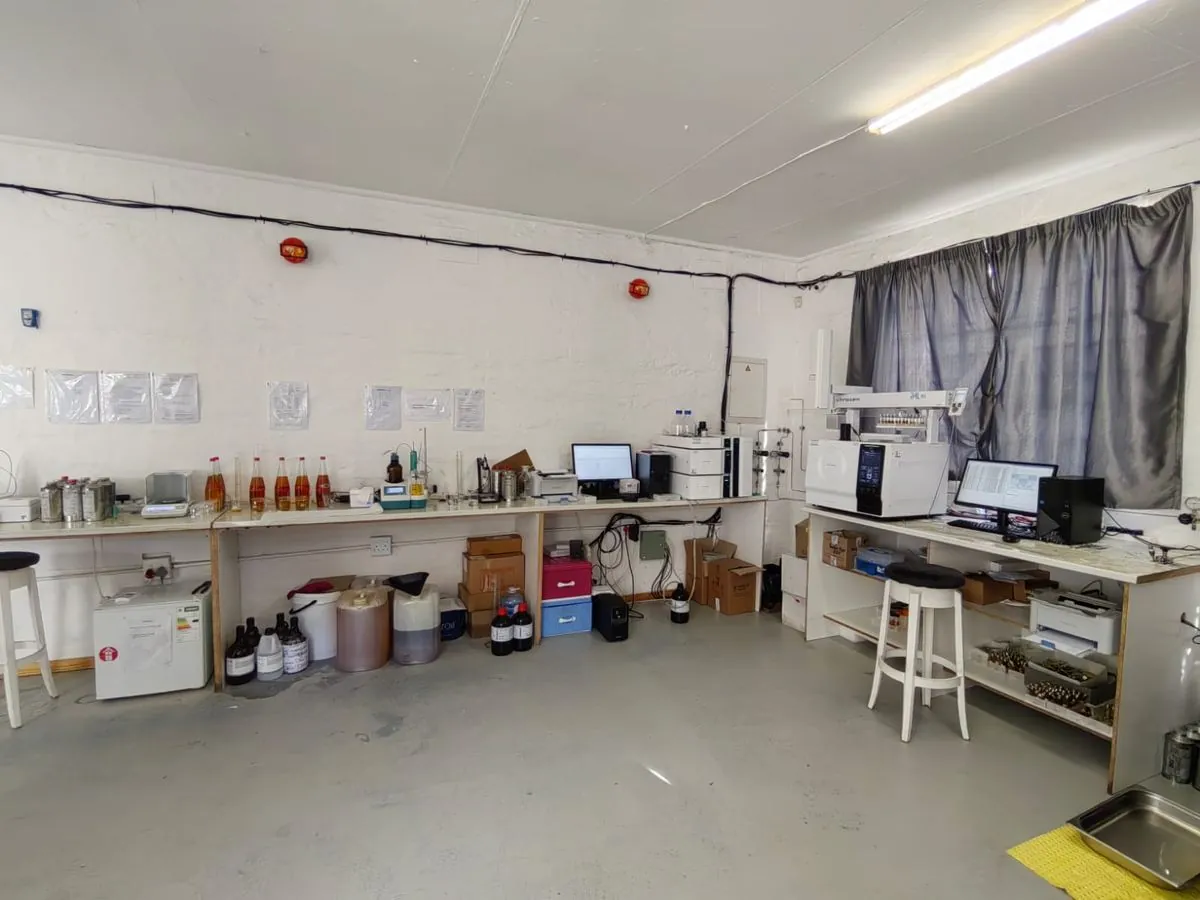
- Dielectric Fluid Solutions, Randfontein, Gauteng
- Accreditation
- SANAS-accredited, facility T1060 (view certificate)
Why moisture matters
Water in transformer oil does damage in three ways:
- Lower dielectric strength. Water reduces the oil's breakdown voltage, so it insulates less well.
- Faster paper ageing. Moisture speeds up the breakdown of the cellulose insulation on the windings, which can't be replaced without a rewind.
- Bubbling under overload. In a wet transformer, a sudden rise in winding temperature can release water vapour bubbles from the paper and lead to a flashover.
Water gets in through a saturated silica gel breather and leaking gaskets or seals, and it is also produced as the oil and paper age.
What the result means
Typical action limits for in-service oil, up to 72.5 kV:
| Moisture result | Typical action |
|---|---|
| Above 30 ppm | Investigate |
| Above 40 ppm | Recondition |
Limits are tighter at higher voltages. The report flags your unit against the correct SANS 60422 voltage class.
Why oil temperature matters
Most of the water in a transformer sits in the paper insulation, not the oil. As the transformer warms up, water moves from the paper into the oil, and as it cools, it moves back. The same unit can give quite different results at different temperatures.
That is why the sample label asks for the top oil temperature, and why it helps to sample at normal running temperature. It also means a low result doesn't always mean the paper is dry, so we read moisture alongside breakdown voltage and the trend from earlier samples.
How we test
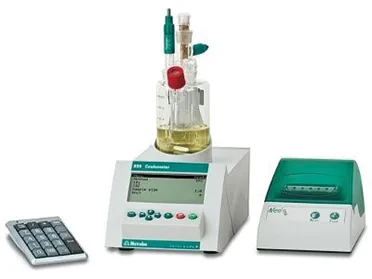
We use a Metrohm coulometric Karl Fischer titrator, following ASTM D1533. The oil is injected into a titration cell, where electrically generated iodine reacts with the water. The charge needed gives the water content directly, down to trace levels. You receive a PDF report by email with the raw data, a trend graph against previous samples on the same unit and a plain-language recommendation.
What happens after a high result
If moisture is high but the oil is otherwise in good condition, the usual answer is to dry the oil by hot oil filtration or vacuum dehydration on site. Check the silica gel breather and the gaskets too, or the water will come back.
Drying the oil removes only some of the water held in the paper. A very wet unit may need repeated treatment or a specialist dry-out. Re-sample after treatment to confirm the result.
Taking the sample
It is easy to add moisture to a sample by accident. Use a clean, dry amber glass bottle, flush 1–2 litres through the bottom valve first, fill slowly and close the bottle straight away. Avoid sampling in rain or very humid conditions if you can. Our transformer oil sampling guide covers each step.
Related testing and guides
- Dissolved Gas Analysis (DGA) of Transformer Oil
- Furan Testing of Transformer Oil
- Breakdown Voltage (BDV) Testing of Transformer Oil
- Acidity (Neutralisation Number) Testing of Transformer Oil
- Inhibitor Content (DBPC) Testing of Transformer Oil
- How to Take a Transformer Oil Sample
- How to Choose a Transformer Oil Testing Laboratory