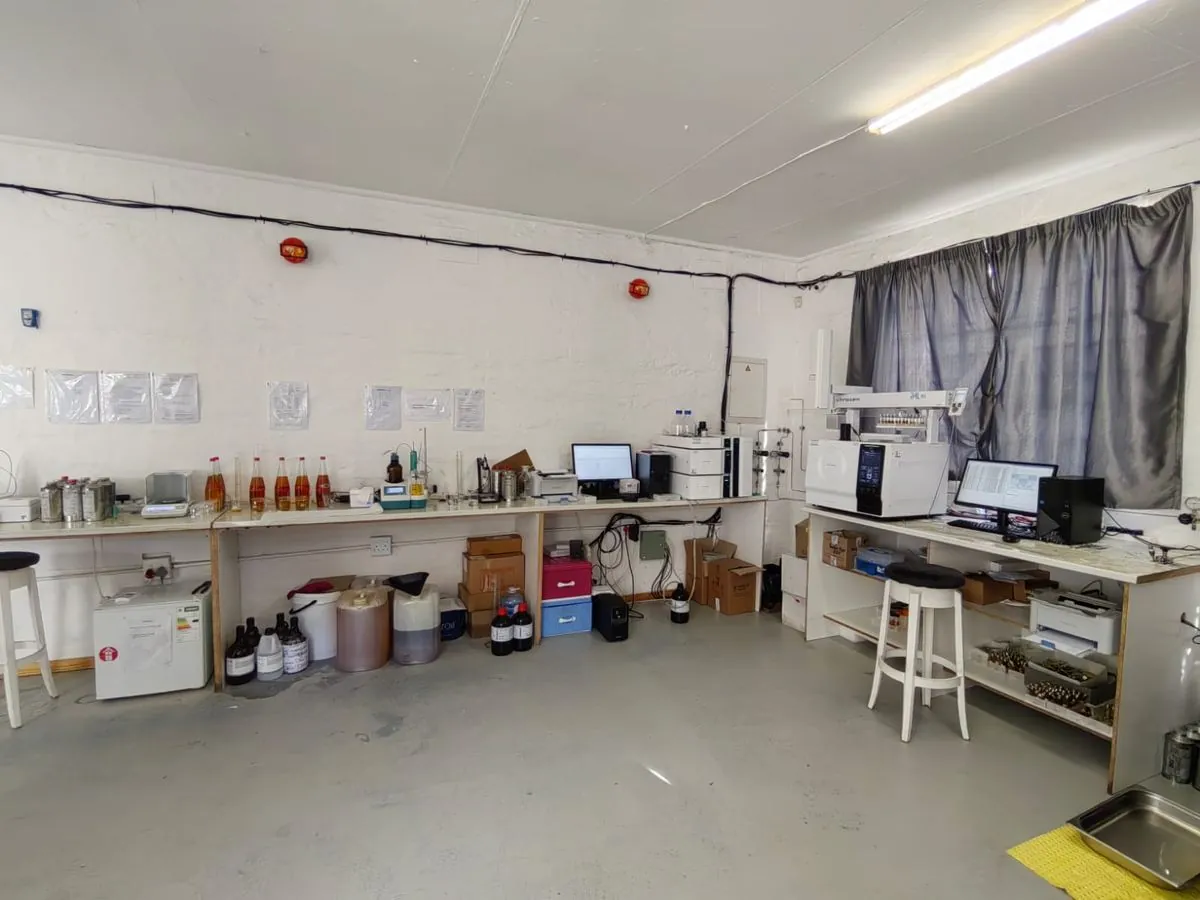
- Method
- Colour-indicator titration with potassium hydroxide (KOH)
- Test standard
- ASTM D974
- Result
- mg KOH per gram of oil
- Turnaround
- 3–5 working days from receipt
- Sample
- 1 litre in a clean amber glass bottle
- Laboratory
- Dielectric Fluid Solutions, Randfontein, Gauteng
- Accreditation
- SANAS-accredited, facility T1060 (view certificate)
Why acidity matters
Oil reacts with oxygen, helped along by heat, moisture and the copper in the windings. Oxidation produces acids first, and then sludge.
- Acids attack the paper insulation. Together with moisture, they speed up its ageing.
- Sludge blocks the cooling. It settles on the windings and in the cooling ducts, so the transformer runs hotter, which speeds up oxidation further.
- Acids corrode metal surfaces inside the tank.
What the result means
Typical limits for in-service oil, up to 72.5 kV:
| Acidity result | Condition |
|---|---|
| Above 0.15 mg KOH/g | Poor. Plan treatment and watch the trend. |
| Above 0.30 mg KOH/g | Bad. Sludge is likely. Reclaim or replace the oil. |
The report flags your unit against the correct SANS 60422 voltage class. The trend matters as much as the number: acidity often climbs slowly for years, then faster once the oil's oxidation inhibitor is used up.
Reading acidity with other results
Acidity is part of a standard oil quality report. We read it together with:
- Interfacial tension (IFT), which falls as oxidation products build up and often gives an early warning of sludge.
- Colour, which darkens as the oil ages.
- Inhibitor content in inhibited oils, which shows how much protection against oxidation is left.
- Moisture, because acids and water together age the paper fastest.
How we test
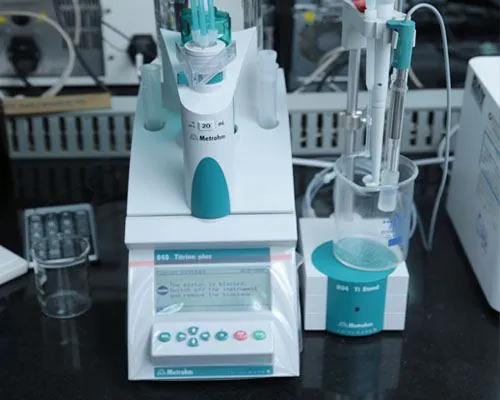
We dissolve a weighed oil sample in solvent with a colour indicator and titrate it with potassium hydroxide (KOH), following ASTM D974. The indicator changes colour once all the acids are neutralised, and the amount of KOH used gives the result in mg KOH per gram of oil. You receive a PDF report by email with the raw data, a trend graph and a plain-language recommendation.
What happens after a high result
Ordinary drying and filtering (reconditioning) removes water and particles, but not acids.
Reclaim the oil. Reclamation passes the oil through an adsorbent such as fuller's earth to remove acids and sludge-forming compounds. It is done on site, often with the transformer still in service. Hot oil reclamation can also help dissolve sludge that has already settled on the windings.
Replace the oil if it is too far gone. Fresh oil in a sludged transformer soon picks up the old oxidation products, so clean the active part as well. After reclamation or an oil change, re-inhibit inhibited oil to its original level.
Taking the sample
Acidity is tested on the routine oil quality sample: 1 litre in a clean amber glass bottle, taken from the bottom drain valve after flushing 1–2 litres. Our transformer oil sampling guide covers each step.
Related testing and guides
- Dissolved Gas Analysis (DGA) of Transformer Oil
- Furan Testing of Transformer Oil
- Breakdown Voltage (BDV) Testing of Transformer Oil
- Moisture Content Testing of Transformer Oil
- Inhibitor Content (DBPC) Testing of Transformer Oil
- How to Take a Transformer Oil Sample
- How to Choose a Transformer Oil Testing Laboratory