Trusted Transformer Oil Testing in South Africa
SANAS-accredited laboratory delivering accurate, reliable dielectric fluid analysis to protect your critical power infrastructure.
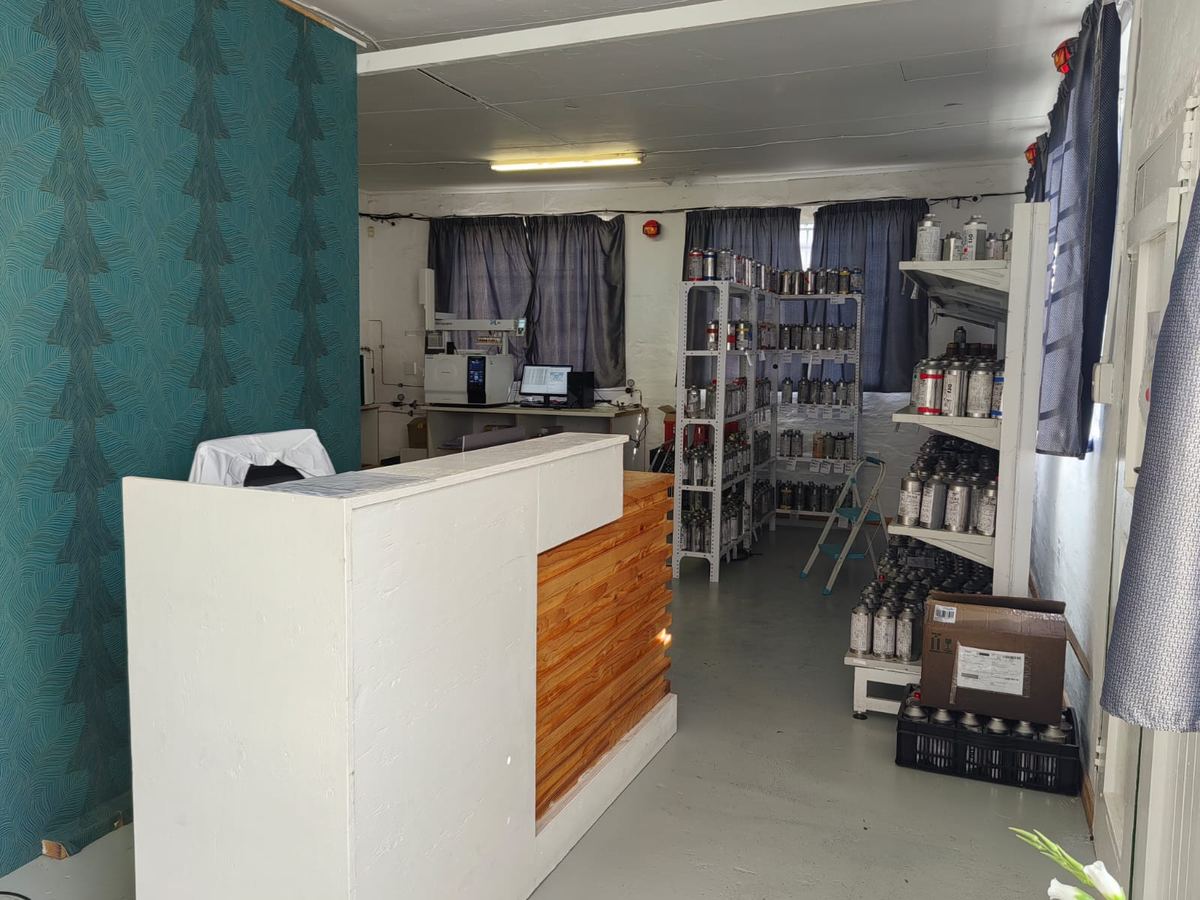
About Dielectric Fluid Solutions
Dielectric Fluid Solutions is a specialist transformer oil testing laboratory in Randfontein, Gauteng, committed to delivering precise, dependable analytical results. Our team of experienced chemists and technicians use state-of-the-art instrumentation to evaluate the condition of insulating oils used in power transformers, switchgear, and other high-voltage equipment.
As a SANAS-accredited facility (ISO 17025:2017), every test we perform meets the highest international standards for quality and technical competence. We help utilities, mines, industrial operators, and maintenance contractors across South Africa and the broader African continent make informed decisions about the health and longevity of their electrical assets.
This Is Us
Meet the people and values behind Dielectric Fluid Solutions — a dedicated team driven by precision, integrity, and a passion for excellence.
Experienced Chemists
Our team of qualified chemists brings years of expertise in dielectric fluid analysis, ensuring accurate and reliable results for every sample.
Skilled Technicians
Our laboratory technicians are trained to operate state-of-the-art instrumentation with precision, maintaining the highest standards in every test we perform.
Quality Focused
As a SANAS-accredited facility, quality is at the core of everything we do. We are committed to continuous improvement and upholding ISO 17025:2017 standards.
Client Partnerships
We work closely with utilities, industrial operators, and maintenance contractors to deliver insights that protect and extend the life of critical electrical assets.
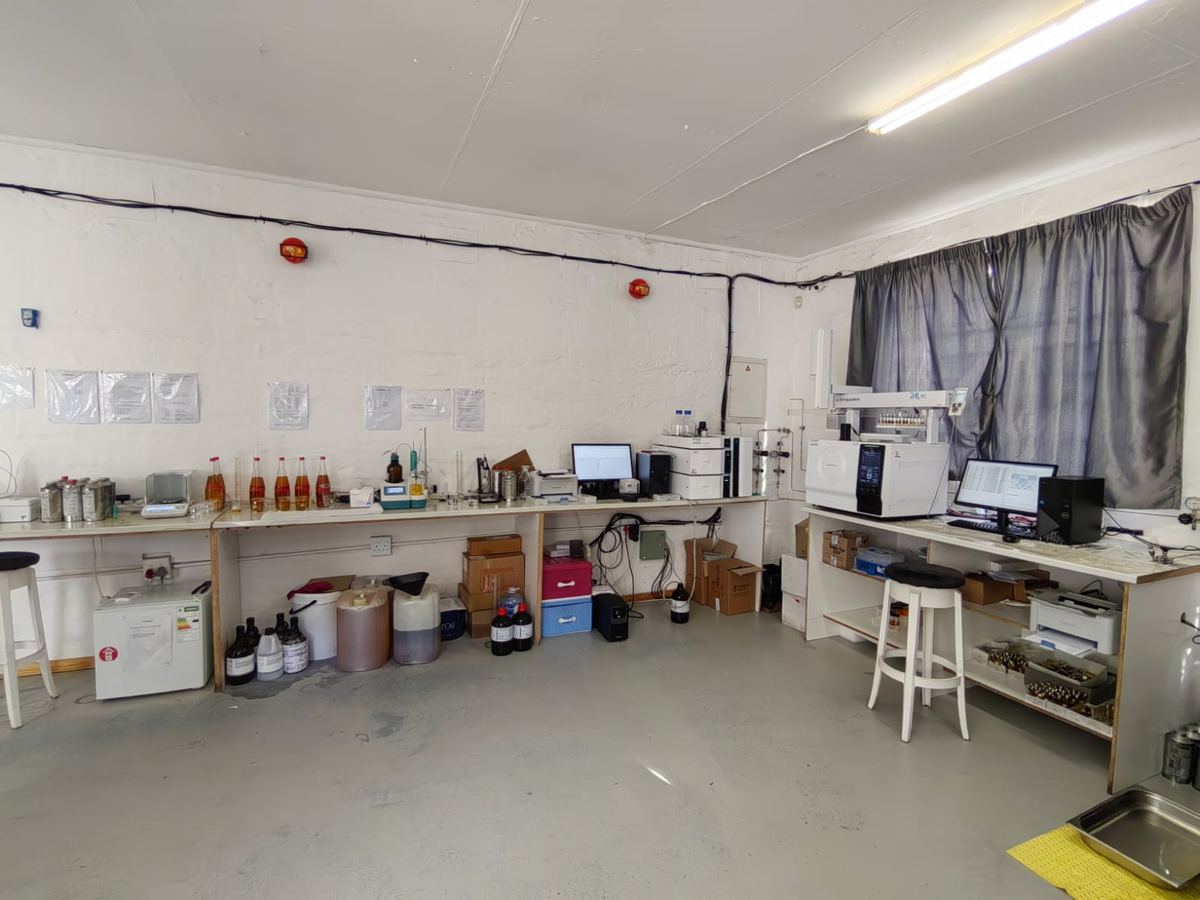
Our Laboratory
Our Testing Services
Comprehensive transformer oil testing performed to international ASTM and IEC standards, backed by SANAS accreditation under ISO 17025:2017.
Breakdown Voltage (BDV)
Determines the dielectric strength of insulating oil — a key indicator of the oil's ability to withstand electrical stress without failure.
IEC 60156More about BDV testingMoisture Content
Coulometric Karl Fischer titration to accurately quantify dissolved water in transformer oil, which degrades insulation performance.
ASTM D1533Dissolved Gas Analysis (DGA)
Gas chromatography to detect and quantify fault gases dissolved in oil, enabling early identification of thermal and electrical faults.
ASTM D3612More about DGA testingAcidity (Neutralisation Number)
Potentiometric titration to measure acidic compounds in oil that cause corrosion and accelerate ageing of insulation materials.
ASTM D974Furan Analysis (Furfural & Related Compounds)
HPLC analysis of furanic compounds to assess the degree of degradation of cellulose insulation within the transformer.
ASTM D5837More about furan testingInhibitor Content (DBPC)
Determines the remaining concentration of antioxidant inhibitor, helping plan oil reclamation and treatment schedules.
ASTM D2668Taking your own samples? Read our transformer oil sampling guide.
Our Equipment
We invest in precision instrumentation from leading manufacturers to ensure the highest quality results for every sample.
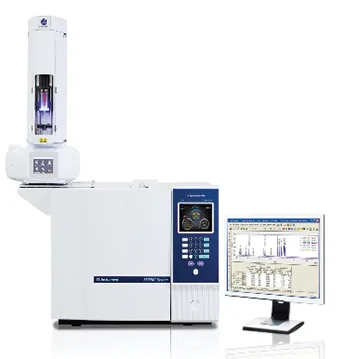
Gas Chromatograph
Dissolved Gas Analysis (DGA)High-sensitivity gas chromatograph for detection of fault gases including hydrogen, methane, ethylene, acetylene, and carbon oxides.
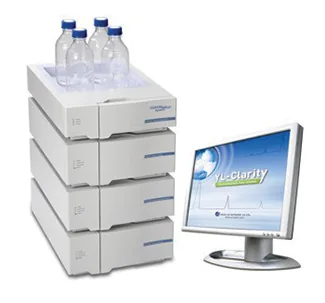
HPLC System
Furan (Furfural) AnalysisHigh-performance liquid chromatography system for precise quantification of furanic compounds indicating cellulose degradation.
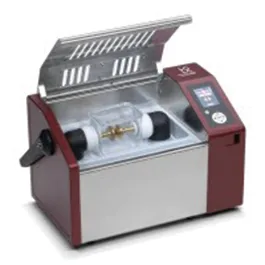
Breakdown Voltage Tester
Dielectric StrengthAutomated oil test set for measuring the breakdown voltage of insulating oils in accordance with IEC 60156.
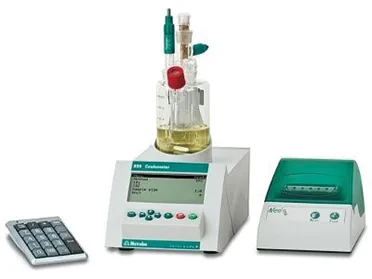
Karl Fischer Titrator
Moisture DeterminationMetrohm coulometric Karl Fischer titrator for accurate measurement of trace moisture levels in transformer oil.
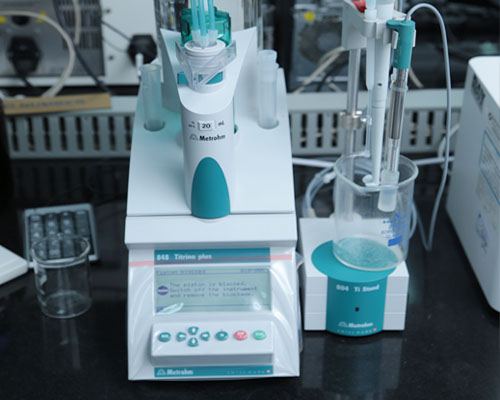
Potentiometric Titrator
Acidity / Neutralisation NumberMetrohm Titrino plus for automated potentiometric titration, determining the acid content of insulating oils.
Accreditation & Quality
Our commitment to quality is validated by independent accreditation bodies, ensuring every result we deliver meets the highest international standards.
SANAS Accredited
Accredited by the South African National Accreditation System (SANAS) as a testing laboratory under ISO/IEC 17025:2017. Facility number T1060. This accreditation confirms our technical competence, impartiality, and consistent operation in line with internationally recognised standards.

ISO 9001:2015
Our quality management system is certified to ISO 9001:2015, demonstrating our commitment to continual improvement, customer satisfaction, and process-driven excellence across all laboratory operations.
Our accreditation scope covers a comprehensive range of transformer oil tests performed to ASTM and IEC standards. Contact us for a full copy of our scope of accreditation.
Frequently Asked Questions
Practical answers about transformer oil testing, sampling, results, and what to do with them.
About the laboratory
Yes. Dielectric Fluid Solutions is accredited by the South African National Accreditation System (SANAS) under ISO/IEC 17025:2017, facility number T1060. This accreditation confirms our technical competence, impartiality, and consistent operation to internationally recognised standards.
We are wholly independent. We are not owned by, nor commercially linked to, any oil supplier, transformer OEM, refurbisher or service provider — so the results we deliver carry no commercial bias.
Yes. We routinely receive and test samples couriered in from outside South Africa. Get in touch with sample volumes, voltage class and origin and we'll advise on the best sampling kit and courier route.
Yes. Clients receive online access to their report archive — historical results, trend graphs and downloadable PDFs — alongside email delivery of each new report.
Our laboratory is located at Unit 2A, Protea Industrial Park, 7 Protea Street, Aureus, Randfontein, Gauteng, South Africa. We serve clients across South Africa and the broader African continent.
Background
Transformer oil is both an insulator and a coolant. Once it absorbs moisture, oxidises, or starts breaking down from internal faults, the transformer is on borrowed time. Routine oil testing tells you the condition of the oil and gives early warning of faults inside the tank (overheating, partial discharge, arcing) — usually months before a trip or failure. On a mine, where an unplanned transformer failure can stop a shaft, mill or section, oil testing is the cheapest insurance you can buy.
We test to the standards a mining EE or COP will expect to see on the report:
- SANS 60422 / IEC 60422 — in-service mineral oil maintenance and condition limits
- IEC 60156 — breakdown voltage (BDV)
- IEC 60814 — moisture content (Karl Fischer, ppm water)
- IEC 60567 / ASTM D3612 — dissolved gas analysis (DGA) sampling and testing
- IEC 60599 — interpretation of DGA results (Duval triangles, key gas, ratios)
- IEC 62535 / IEC 61619 — corrosive sulphur and PCB screening
The report references the exact clause used, so it stands up in an audit.
Sampling
A practical mining schedule that aligns with SANS 60422:
- Critical / large units (≥ 5 MVA, shaft winders, mill drives, main intake transformers): DGA every 6 months, full oil quality (BDV, moisture, acidity, IFT, colour, DDF) annually.
- Standard distribution and section transformers: full oil quality annually, DGA at least annually or whenever a unit is suspect.
- New or recently repaired units: sample at commissioning, 3 months later, then fall into the routine cycle.
- After any electrical event (through-fault, lightning strike, protection operation, abnormal noise, gas relay alarm): sample immediately.
A bad sample gives a misleading report. The basics:
- Use the bottom drain valve for routine oil quality samples — that is where moisture and sediment settle.
- Use the dedicated DGA sampling point (or the bottom valve if none) and a glass syringe or sealed metal can for DGA. Plastic bottles let dissolved gases escape — the result is meaningless.
- Flush 1–2 litres through the valve before filling the sample container, into a separate waste bottle.
- Fill slowly to avoid creating bubbles. For DGA, exclude all air — no headspace.
- Sample with the transformer in service if safe to do so (running temperature, oil circulating). If not, sample as soon after shut-down as practical.
- Label immediately: site, transformer ID, serial number, MVA, voltage, top oil temperature, ambient, date, time, sampler's name.
- Keep upright, out of direct sun, and courier within 48 hours.
We supply sample kits (bottle, syringe, labels, chain-of-custody form) on request. See our full transformer oil sampling guide.
- Routine oil quality (BDV, moisture, acidity, etc.): 1 litre in a clean amber glass bottle.
- DGA only: 50–100 ml in a glass syringe or sealed metal can.
- Full suite + furans + PCB: 1.5 litres.
Yes, provided the unit has a sampling valve designed for live sampling, the foreman has authorised it, the sampler is competent and wearing arc-rated PPE, and a second person is in attendance. If there is any doubt — gas relay alarm, recent fault, audible discharge, oil leaking — do not sample live. Isolate first.
Tests and what they mean
Oil quality tells you the condition of the oil itself — is it still a good insulator and coolant. DGA tells you what is happening inside the transformer by measuring the gases dissolved in the oil. You want both. Oil quality answers "must I dry, filter or replace this oil?" DGA answers "is this transformer developing a fault?"
| Test | What it tells you | Typical action limit (in-service, ≤ 72.5 kV) |
|---|---|---|
| Breakdown voltage (BDV) | Dielectric strength of the oil | < 50 kV → investigate; < 40 kV → recondition |
| Moisture (Karl Fischer, ppm) | Water in the oil | > 30 ppm → investigate; > 40 ppm → recondition |
| Acidity (mg KOH/g) | Oxidation / ageing | > 0.15 → poor; > 0.3 → bad |
| Interfacial tension (IFT, mN/m) | Sludge precursors | < 25 → poor |
| Dielectric dissipation factor (tan δ) | Polar contaminants | > 0.1 at 90 °C → poor |
| Colour | Quick visual ageing indicator | Darkening trend matters more than absolute value |
| Flash point | Volatile contamination | Drop > 5 °C from baseline → investigate |
Limits tighten at higher voltages — the report flags your unit against the correct SANS 60422 voltage class. More on breakdown voltage testing.
Each gas points to a different kind of fault:
- Hydrogen (H₂) — partial discharge / corona
- Methane (CH₄), ethane (C₂H₆) — low-temperature thermal faults (< 300 °C)
- Ethylene (C₂H₄) — high-temperature thermal faults (> 700 °C, hot spots)
- Acetylene (C₂H₂) — arcing. Treat as serious. Any measurable C₂H₂ on a transformer that has never had one before warrants a follow-up sample.
- Carbon monoxide (CO), carbon dioxide (CO₂) — paper insulation degradation. Rising CO with rising furans = the windings are ageing.
The lab applies IEC 60599 ratios and the Duval triangle to classify the fault. The report says, in plain English, what kind of fault is most likely (e.g. "T2 — thermal fault 300–700 °C") and what to do next. More on dissolved gas analysis.
Furans (especially 2-FAL) come from the breakdown of the paper insulation on the windings. You can't replace paper without rewinding. Order a furan test when:
- the transformer is > 15 years old, or
- CO and CO₂ are climbing, or
- you're deciding whether to refurbish or replace.
More on furan testing.
Yes. Any oil topped up before the late 1980s, or of unknown history, should be screened. We do an L2000 / GC screen and issue a certificate suitable for waste disposal and DMRE compliance.
Results, turnaround and cost
- Routine oil quality: 3–5 working days from receipt.
- DGA: 2–3 working days.
- Emergency / fault investigation: 24 hours, by arrangement, for a surcharge.
Couriers from remote sites add 1–2 days — factor that in.
PDF report by email, with raw data, comparison to SANS 60422 limits, trend graph against previous samples on the same unit, and a plain-language recommendation (continue service / re-sample / recondition / investigate / remove from service). Clients also have online access to their full report archive.
Acting on the results
The oil itself is still serviceable but needs to be dried and filtered (typically by hot oil filtration / vacuum dehydration on site). The transformer doesn't have to be taken out of service for long. Reconditioning is far cheaper than an oil change.
This is reserved for cases where the oil and/or the gas pattern indicate the transformer is unsafe to keep running — for example, rising acetylene, BDV well below limit with confirmed moisture, or a sudden DGA shift. Isolate the unit, do not energise, and call us — we'll usually recommend an immediate re-sample to confirm, and an inspection by your transformer OEM or a qualified repairer.
Not necessarily — but it has to be taken seriously. Acetylene means arcing somewhere in the tank. Steps:
- Re-sample within 24–48 hours to confirm and check the trend.
- Reduce load if possible.
- Check Buchholz / gas relay; do not reset without sampling the gas.
- If acetylene is rising sample-to-sample, plan an outage.
What matters is the rate of change, not a single number. A unit with 25 ppm H₂ that has been sitting at 25 ppm for five years is far less concerning than one that went from 5 to 25 ppm in three months. The report shows trend graphs for exactly this reason — keep the historical samples on file and always send the previous report number with new samples so we can plot it for you.
Logistics
Yes. We run scheduled site visits across Gauteng and to mines on request elsewhere in South Africa and the region. For a fleet of more than ten transformers, an on-site sampling and condition-monitoring contract usually works out cheaper than crew time + courier + sample kits.
This FAQ is a quick guide and does not replace SANS 60422, the OEM's manual, or your mine's COP for electrical maintenance. When in doubt, sample more often, not less.
Contact Us
Ready to submit a sample or need a quote? Get in touch — our team is here to help.
24/7 Transformer Emergencies
Call or WhatsApp any time, day or night:
Phone
T: 010 745 4927
info@dielectricfs.co.za
Location
Unit 2A, Protea Industrial Park, 7 Protea Street, Aureus, Randfontein