- Method
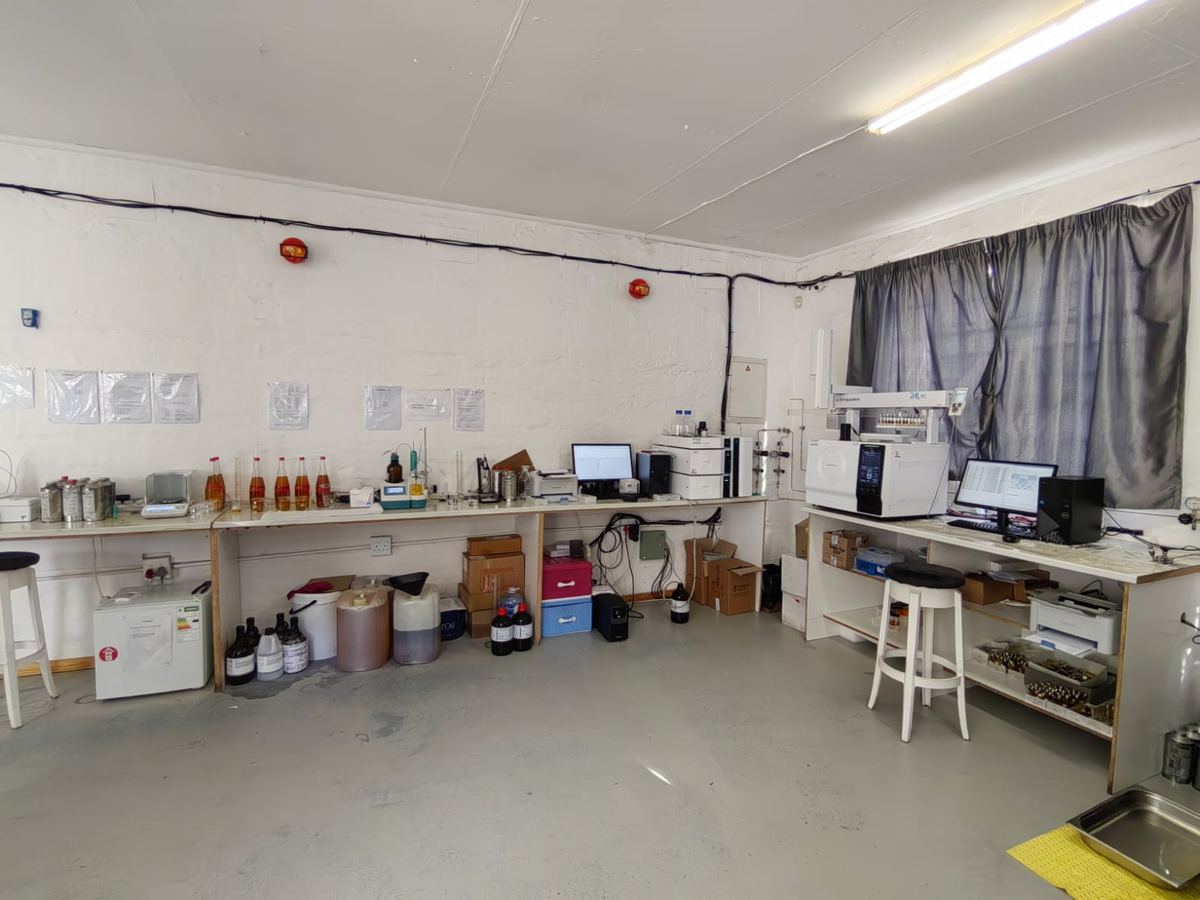
- Automated oil test set
- Test standard
- IEC 60156
- Turnaround
- 3–5 working days from receipt
- Sample
- 1 litre in a clean amber glass bottle
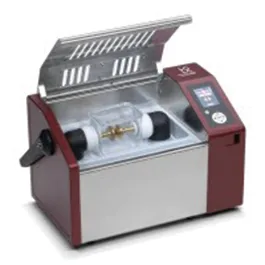
What the result means
Typical action limits for in-service oil, up to 72.5 kV:
| BDV result | Typical action |
|---|---|
| Below 50 kV | Investigate |
| Below 40 kV | Recondition |
Limits tighten at higher voltages. The report flags your unit against the correct SANS 60422 voltage class.
Reading BDV with the moisture result
Dissolved water degrades insulation performance, so we report BDV alongside moisture content by Karl Fischer titration. Typical in-service limits at up to 72.5 kV are above 30 ppm to investigate and above 40 ppm to recondition.
What happens after a low result
Recondition the oil. The oil is still serviceable but needs to be dried and filtered, typically by hot oil filtration or vacuum dehydration on site. The transformer doesn't have to be out of service for long, and reconditioning is far cheaper than an oil change.
Remove from service. This is reserved for cases where the transformer is unsafe to keep running, such as BDV well below the limit with confirmed moisture. Isolate the unit, do not energise it, and call us. We usually recommend an immediate re-sample to confirm, and an inspection by your transformer OEM or a qualified repairer.
BDV as part of a full oil quality test
BDV is one of several results in a standard oil quality report, alongside moisture, acidity, interfacial tension, dielectric dissipation factor (tan δ), colour and flash point. Together they tell you whether the oil is still a good insulator and coolant.
Oil quality does not tell you whether the transformer is developing a fault. For that, you also need dissolved gas analysis.
Taking the sample
Use the bottom drain valve, where moisture and sediment settle. Flush 1–2 litres through the valve first, then fill a clean amber glass bottle slowly to avoid bubbles. Our transformer oil sampling guide covers each step.