- Routine oil quality
- 1 litre in a clean amber glass bottle
- DGA only
- 50–100 ml in a glass syringe or sealed metal can
- Full suite + furans + PCB
- 1.5 litres
- Courier
- Within 48 hours of sampling
Step by step
- Use the bottom drain valve for routine oil quality samples. That is where moisture and sediment settle.
- Use the dedicated DGA sampling point (or the bottom valve if there is none) and a glass syringe or sealed metal can for DGA. Plastic bottles let dissolved gases escape, which makes the result meaningless.
- Flush 1–2 litres through the valve into a separate waste bottle before filling the sample container.
- Fill slowly to avoid creating bubbles. For DGA, exclude all air, with no headspace.
- Sample with the transformer in service if safe to do so (running temperature, oil circulating). If not, sample as soon after shut-down as practical.
- Label immediately: site, transformer ID, serial number, MVA, voltage, top oil temperature, ambient, date, time and sampler's name.
- Keep upright, out of direct sun, and courier within 48 hours.
Is it safe to sample an energised transformer?
Yes, provided the unit has a sampling valve designed for live sampling, the foreman has authorised it, the sampler is competent and wearing arc-rated PPE, and a second person is in attendance. If there is any doubt (gas relay alarm, recent fault, audible discharge, oil leaking), do not sample live. Isolate first.
How often to sample
A practical mining schedule that aligns with SANS 60422:
- Critical or large units (≥ 5 MVA, shaft winders, mill drives, main intake transformers): DGA every 6 months, full oil quality annually.
- Standard distribution and section transformers: full oil quality annually, DGA at least annually or whenever a unit is suspect.
- New or recently repaired units: at commissioning and 3 months later, then on the routine cycle.
- After any electrical event (through-fault, lightning strike, protection operation, abnormal noise, gas relay alarm): immediately.
Sample kits and on-site sampling
We supply sample kits (bottle, syringe, labels and chain-of-custody form) on request.
We also run scheduled site visits across Gauteng, and to mines on request elsewhere in South Africa and the region. For a fleet of more than ten transformers, an on-site sampling and condition-monitoring contract usually works out cheaper than crew time, couriers and sample kits.
What we test your sample for
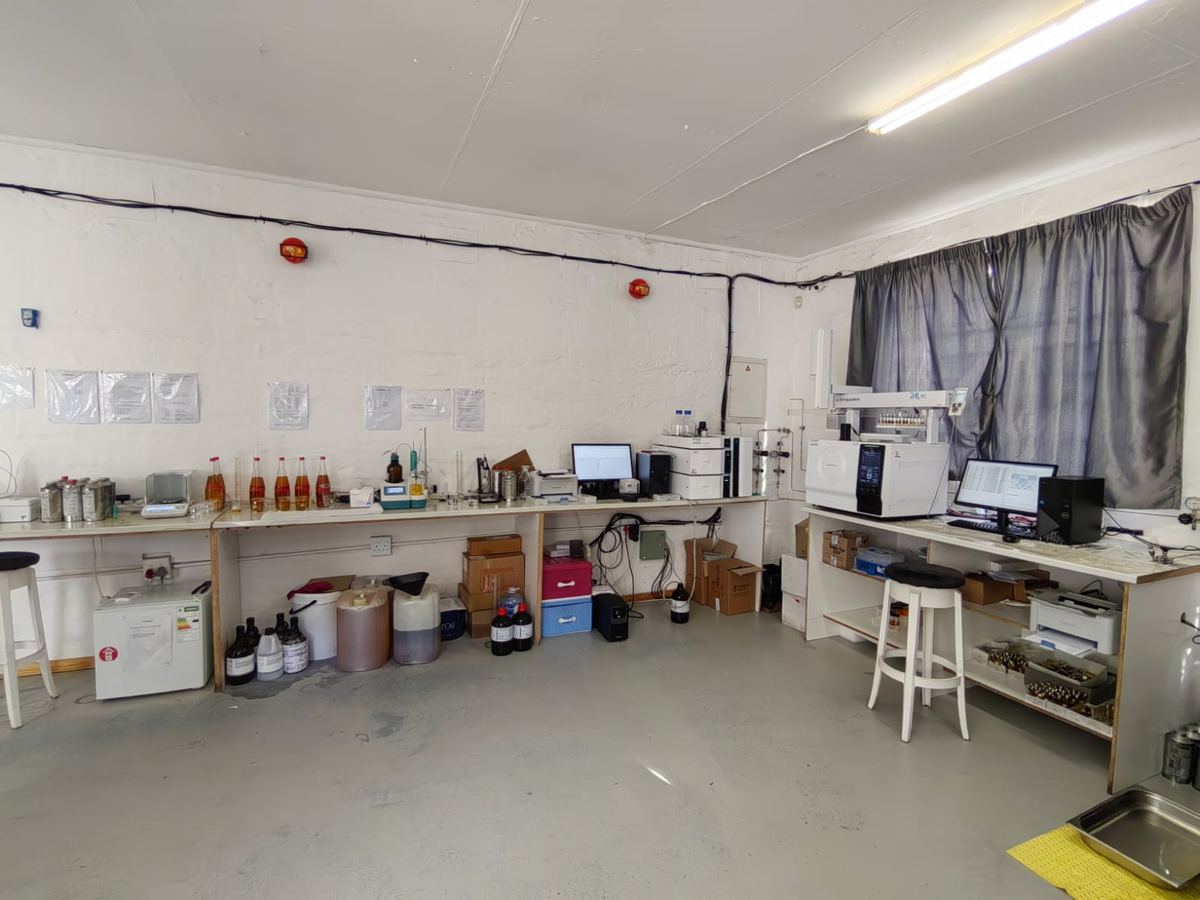
Routine oil quality includes breakdown voltage, moisture and acidity. Dissolved gas analysis shows whether a fault is developing, and furan testing assesses the paper insulation.
Use this guide with your site procedures
This guide does not replace SANS 60422, the OEM's manual, or your mine's COP for electrical maintenance. When in doubt, sample more often, not less.