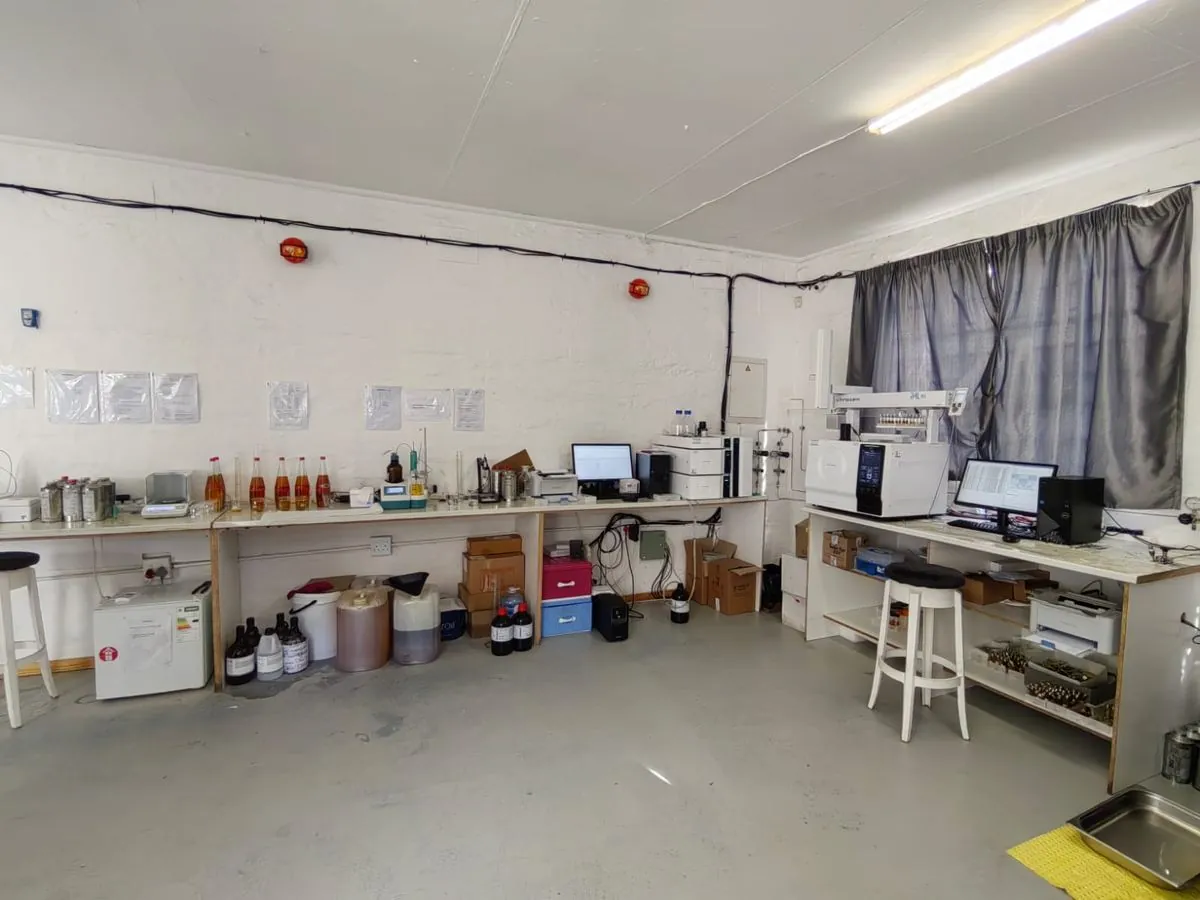
- Our accreditation
- SANAS facility T1060 (ISO/IEC 17025:2017)
- Independence
- Not linked to any oil supplier, transformer OEM or refurbisher
- Turnaround
- DGA 2–3 working days; routine oil quality 3–5 working days
- Emergencies
- Fault samples in 24 hours, by arrangement
About this guide
The lab's result decides whether a transformer keeps running, has its oil reconditioned or comes out of service. A wrong or late result costs far more than the test, so it pays to check a lab before you send it samples.
Written by Dielectric Fluid Solutions, a SANAS-accredited transformer oil testing laboratory in Randfontein, Gauteng. Published 28 November 2026. The questions apply to any lab, including us, so we've added our own answers for you to compare with what other labs tell you.
Check that the accreditation covers your tests
SANAS accreditation under ISO/IEC 17025 applies to the specific tests and methods listed in a lab's scope schedule, not to everything the lab does. A lab can be accredited for some tests and not others.
- Ask for the lab's SANAS facility number and look it up with SANAS.
- Read the scope schedule and confirm that the tests and methods you need are on it.
- Check that the method on your report matches the one in the scope.
- Check that the accreditation certificate is still valid.
- Ask whether the lab takes part in proficiency testing for the tests you rely on most, such as DGA, and how it performed.
Our answer: we're SANAS-accredited under ISO/IEC 17025:2017, facility T1060. Our accreditation certificate is valid until 19 September 2029. Ask us for the full scope schedule and we'll send it.
Ask whether the lab is independent
Some labs are part of companies that sell oil, build or repair transformers, or recondition oil. That doesn't make their results wrong, but it's worth knowing whether anyone benefits from the action a report recommends, such as reconditioning or replacement.
Ask: "Does your company sell any product or service your reports might recommend?"
Our answer: we're wholly independent. We're not owned by, or commercially linked to, any oil supplier, transformer OEM, refurbisher or service provider.
Make sure the lab runs the tests and standards you need
Most maintenance programmes rely on a core set of tests. Check that the lab runs each one and which standard it follows, because the standard affects how results compare over time.
| Test | What it tells you | Standard we use |
|---|---|---|
| Dissolved gas analysis (DGA) | Faults developing inside the transformer | ASTM D3612, interpreted to IEC 60599 |
| Breakdown voltage (BDV) | Dielectric strength of the oil | IEC 60156 |
| Moisture content | Water in the oil | ASTM D1533 |
| Acidity | Oxidation and ageing of the oil | ASTM D974 |
| Furan analysis | Ageing of the paper insulation | ASTM D5837 |
| Inhibitor content | Remaining antioxidant in inhibited oil | ASTM D2668 |
Labs package tests differently, so ask exactly what's included in a "routine" or "full" test before you compare quotes.
Compare turnaround, and ask about emergencies
Ask for turnaround in working days from when the lab receives the sample, then add courier time. Couriers from remote sites can add 1–2 days.
For a gas relay alarm or suspected fault, ask whether the lab can fast-track a sample and how to reach someone outside office hours.
Our answer: routine oil quality takes 3–5 working days from receipt, and DGA 2–3 working days. Emergency and fault investigation samples can be turned around in 24 hours, by arrangement, for a surcharge. Our 24/7 emergency line is below.
Check what sampling support you get
A bad sample gives a misleading report, however good the lab. Check that the lab supplies:
- the right containers, including a glass syringe or sealed metal can for DGA
- labels and a chain-of-custody form
- clear sampling instructions
- on-site sampling, if your team can't sample safely itself
Our answer: we supply sample kits (bottle, syringe, labels and chain-of-custody form) on request. We run scheduled site visits across Gauteng, and visit mines elsewhere in South Africa and the region on request. Our transformer oil sampling guide covers each step.
Look for reports you can act on
A report should tell you what to do, not just list numbers. Look for:
- results compared with the limits for your transformer's voltage class in SANS 60422
- DGA interpreted with recognised methods, such as IEC 60599 ratios and the Duval triangle
- trend graphs against earlier samples from the same unit
- a plain-language recommendation
- the standard and clause behind each result, so the report stands up in an audit
- access to your past reports
Our answer: each report is a PDF by email with the raw data, comparison to SANS 60422 limits, a trend graph and a plain-language recommendation: continue service, re-sample, recondition, investigate or remove from service. Reports reference the exact clause used, and clients have online access to their full report archive.
Understand what affects the price
Price depends on which tests you need, how many transformers you test, whether you're on a contract or sending one-off samples, and whether you need an emergency turnaround or on-site sampling.
Ask for an itemised quote, so you compare the same tests and turnaround between labs rather than a headline price.
Our answer: get in touch below for a quote. For a fleet of more than ten transformers, an on-site sampling and condition-monitoring contract usually works out cheaper than crew time, couriers and sample kits.
Checklist: questions to ask any lab
Use this list to compare labs. We've filled in our own answers.
| Ask the lab | Our answer |
|---|---|
| Accreditation. What's your SANAS facility number, and are my tests in your scope? | T1060, ISO/IEC 17025:2017. Scope schedule on request. |
| Certificate. When does your accreditation certificate expire? | 19 September 2029 |
| Independence. Do you sell anything your reports might recommend? | No. We're wholly independent. |
| DGA turnaround. How many working days from receipt? | 2–3 working days |
| Routine oil quality. How many working days from receipt? | 3–5 working days |
| Emergencies. Can you fast-track a fault sample? | 24 hours by arrangement; 24/7 emergency line |
| Sample kits. Do you supply containers and chain-of-custody forms? | Yes, on request |
| On-site sampling. Can you sample on site? | Scheduled Gauteng visits; mines elsewhere on request |
| Reports. Do reports include limits, interpretation, trends and a recommendation? | All four, as a PDF by email |
| Report history. Can I see past reports online? | Yes, through our client report archive |
| Price. Can I get an itemised quote? | Yes |
Common questions
What does SANAS accreditation mean for a test result?
It means SANAS has assessed the lab's competence to run that test by that method under ISO/IEC 17025. It applies to the tests in the lab's scope schedule, so check that your test is listed.
Can I send samples from outside Gauteng?
Yes. Courier samples to the lab within 48 hours of sampling. We routinely test samples from across South Africa and from outside it.
How do I know a lab's DGA results are reliable?
Check that DGA is in the lab's accredited scope and ask about proficiency testing. Make sure samples are taken in a glass syringe or sealed metal can, because plastic bottles let the gases escape.
Is the cheapest lab good enough for routine testing?
It can be, if the tests, standards and turnaround match what you need. Compare itemised quotes for the same tests, and check that the report tells you what to do next.
Related testing and guides
- Dissolved Gas Analysis (DGA) of Transformer Oil
- Furan Testing of Transformer Oil
- Breakdown Voltage (BDV) Testing of Transformer Oil
- Moisture Content Testing of Transformer Oil
- Acidity (Neutralisation Number) Testing of Transformer Oil
- Inhibitor Content (DBPC) Testing of Transformer Oil
- How to Take a Transformer Oil Sample